.svg)

The hillside
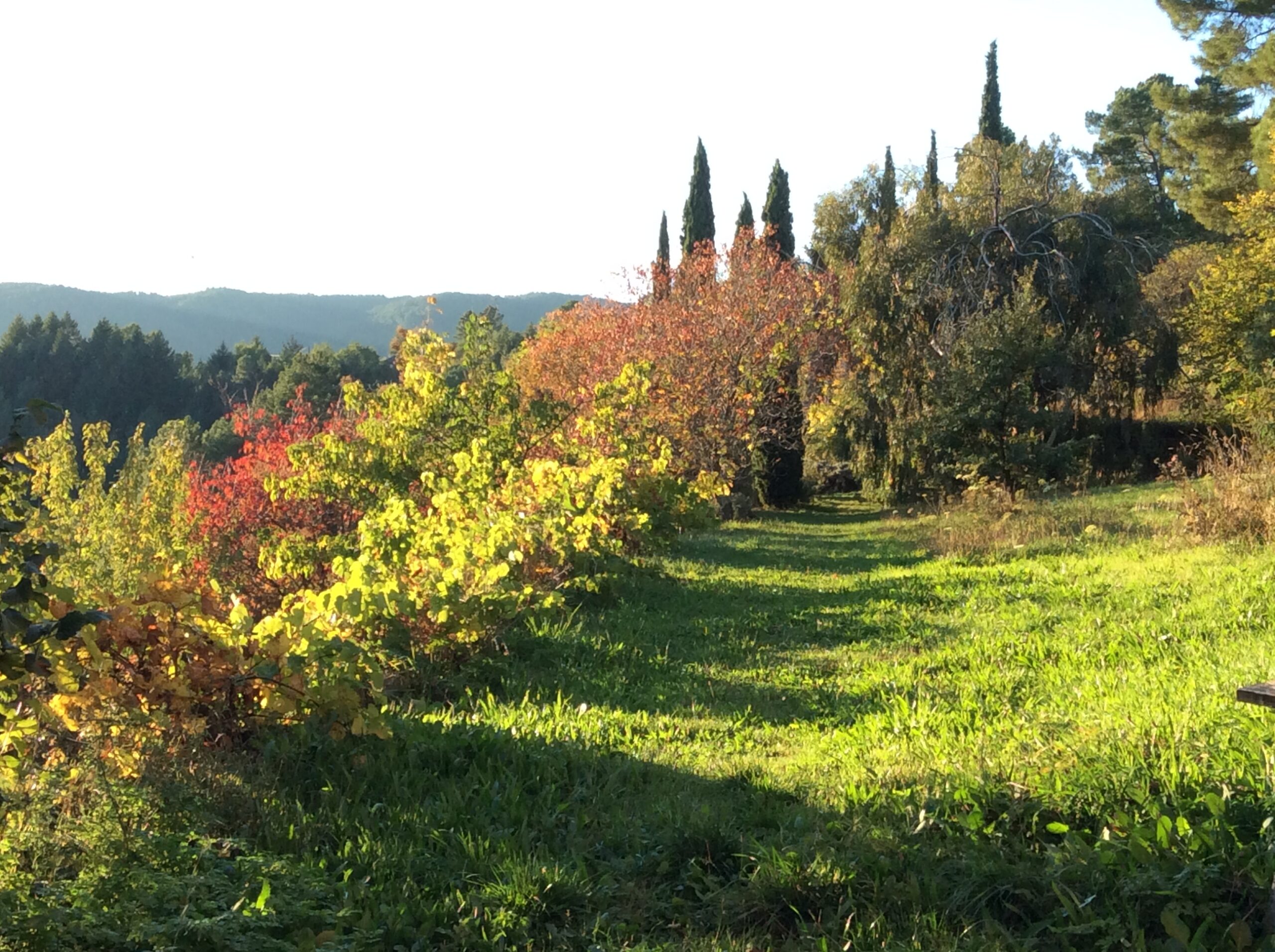
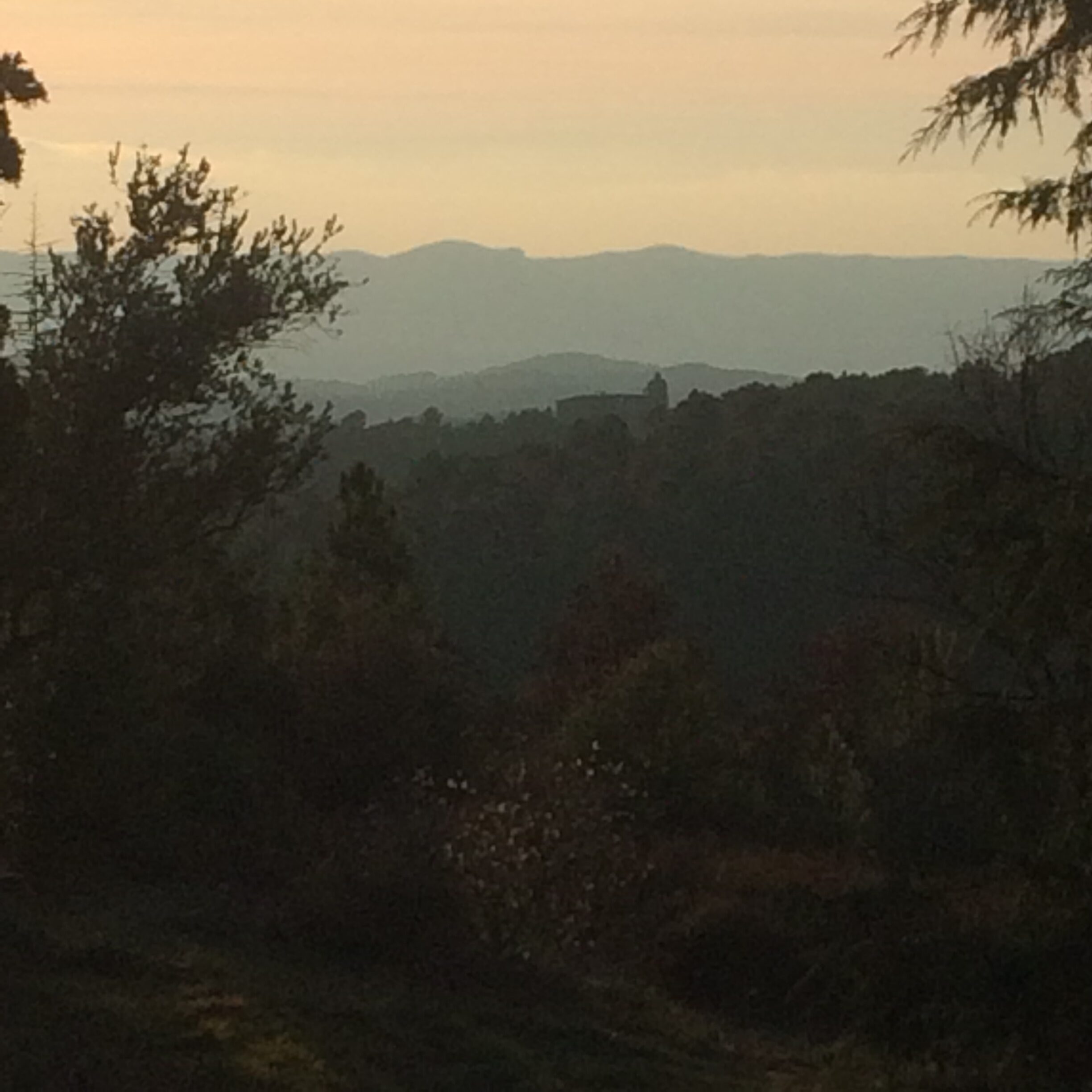
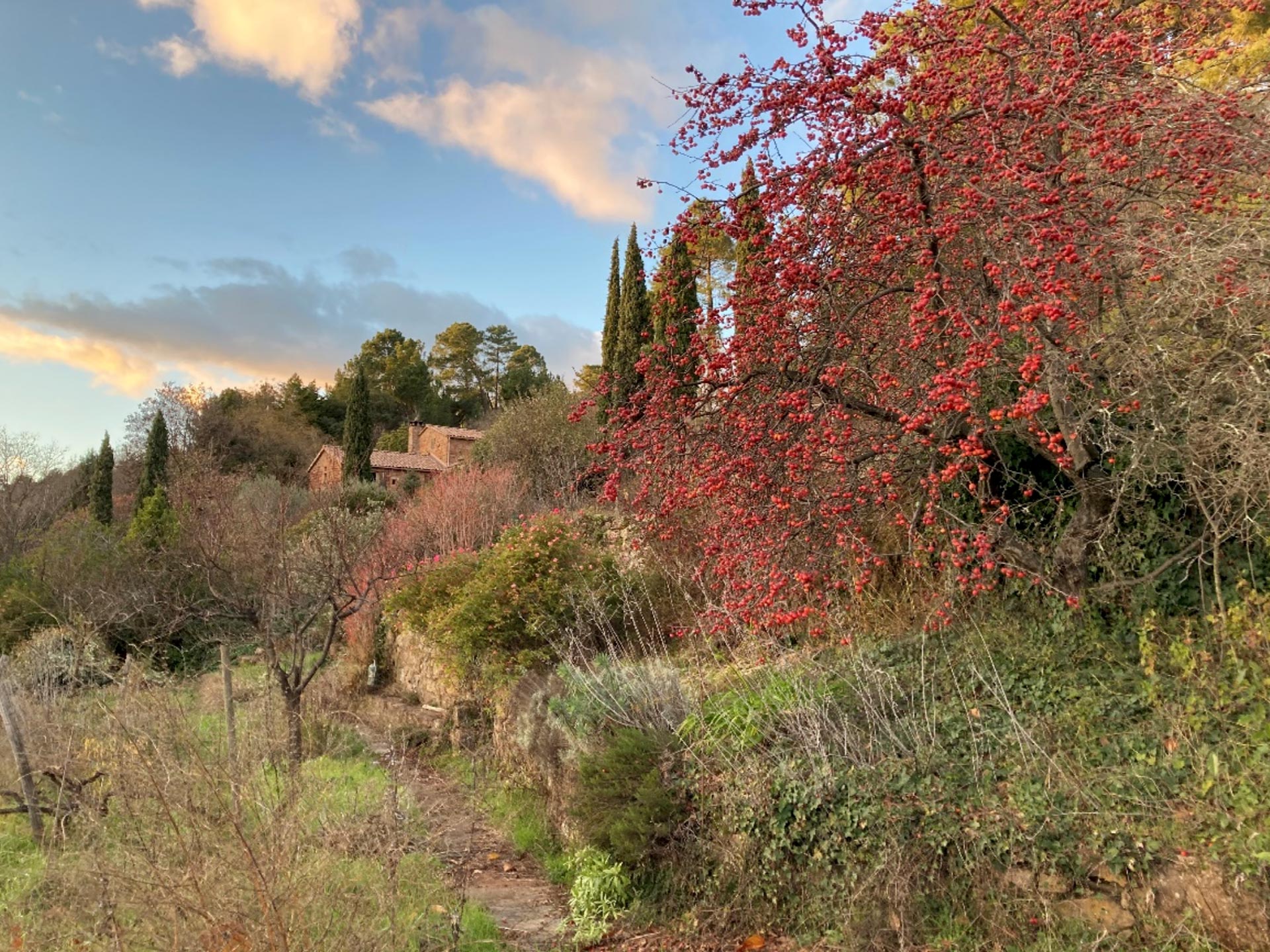
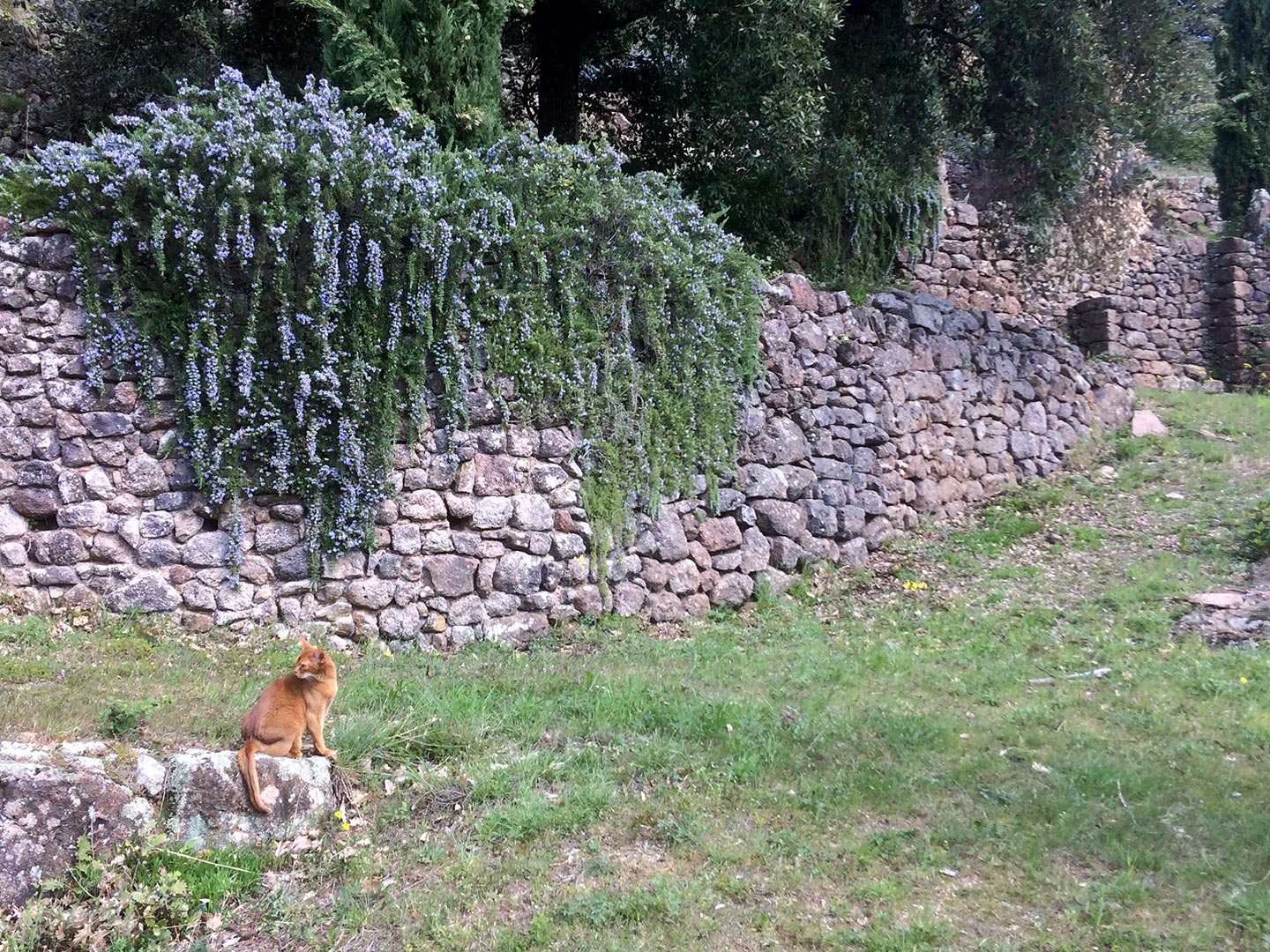
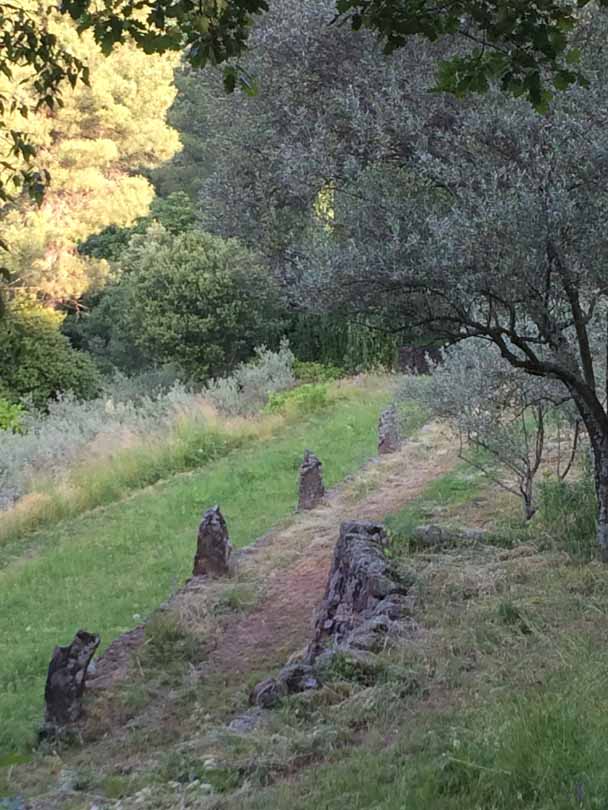
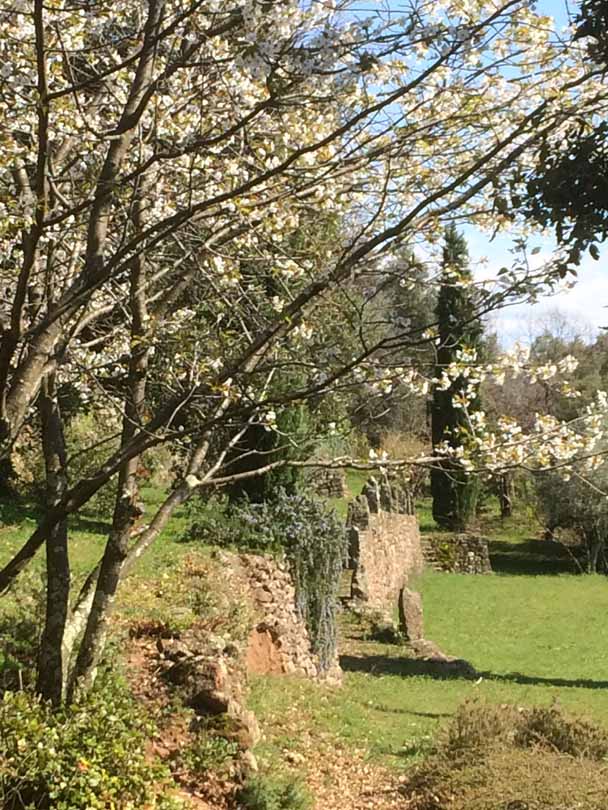
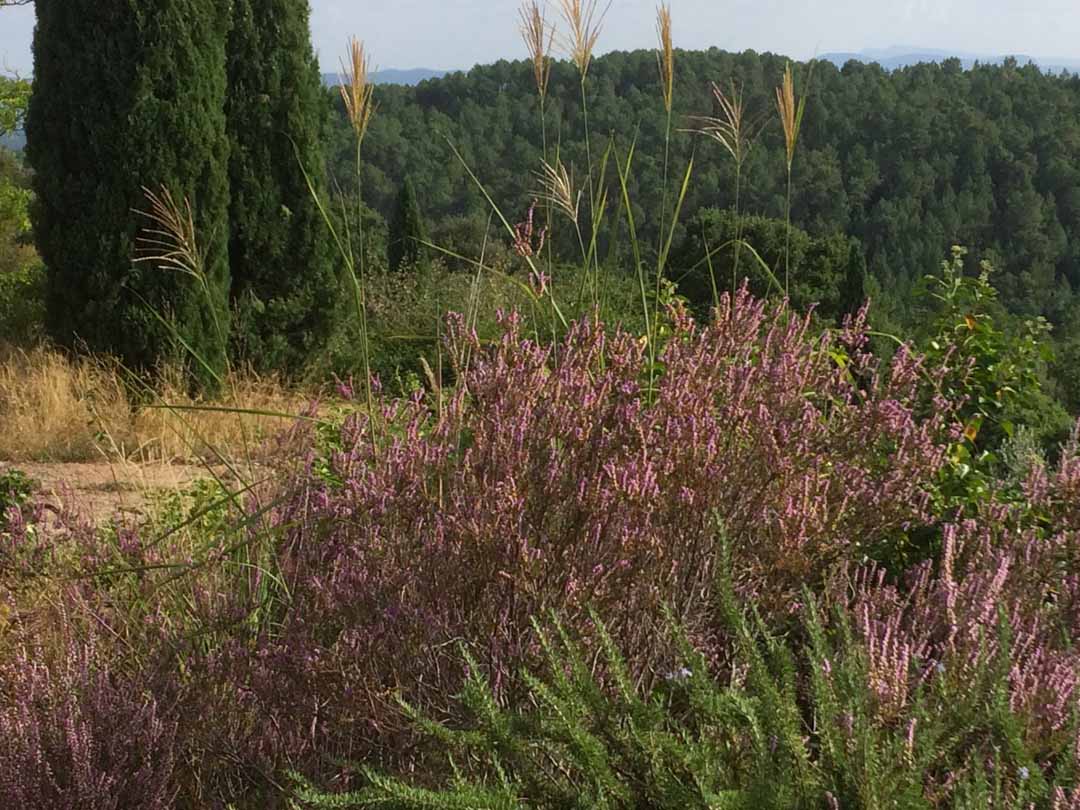
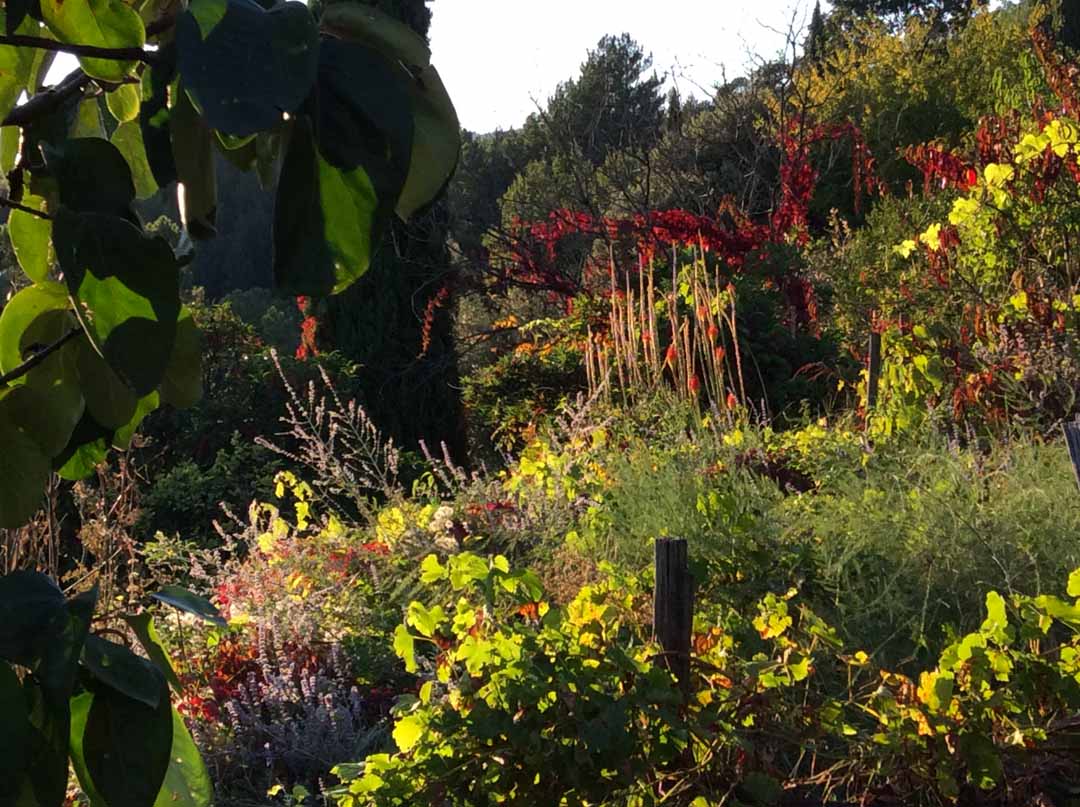
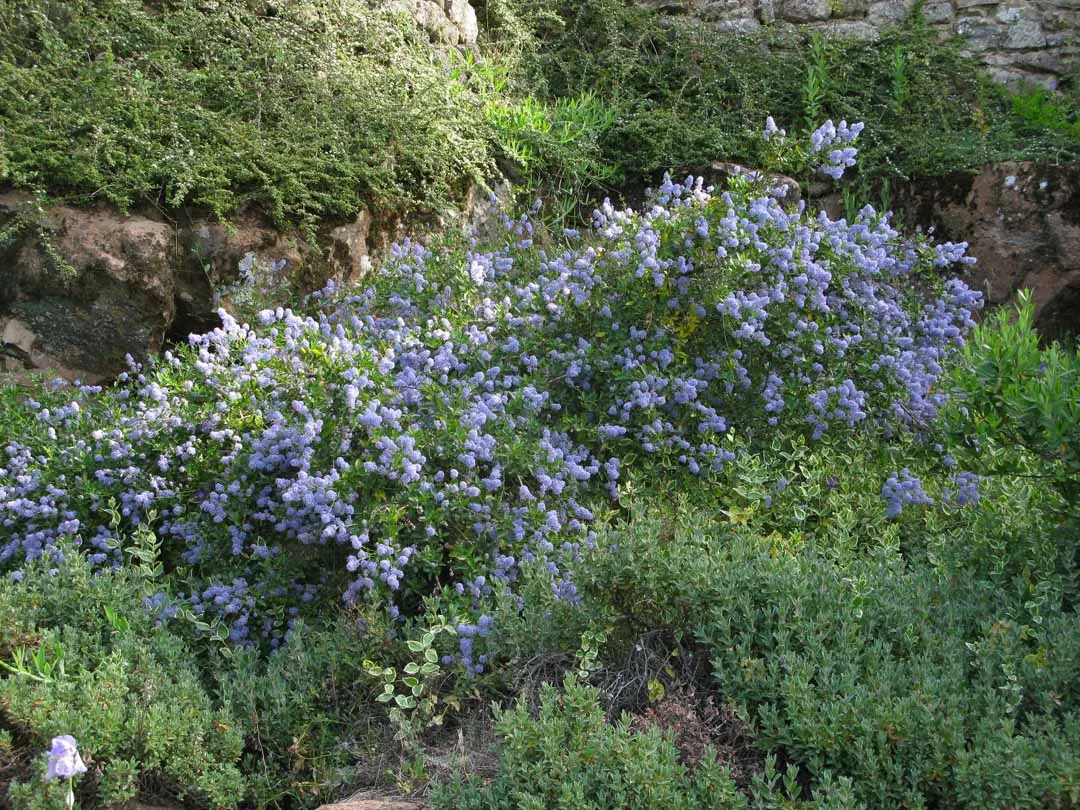
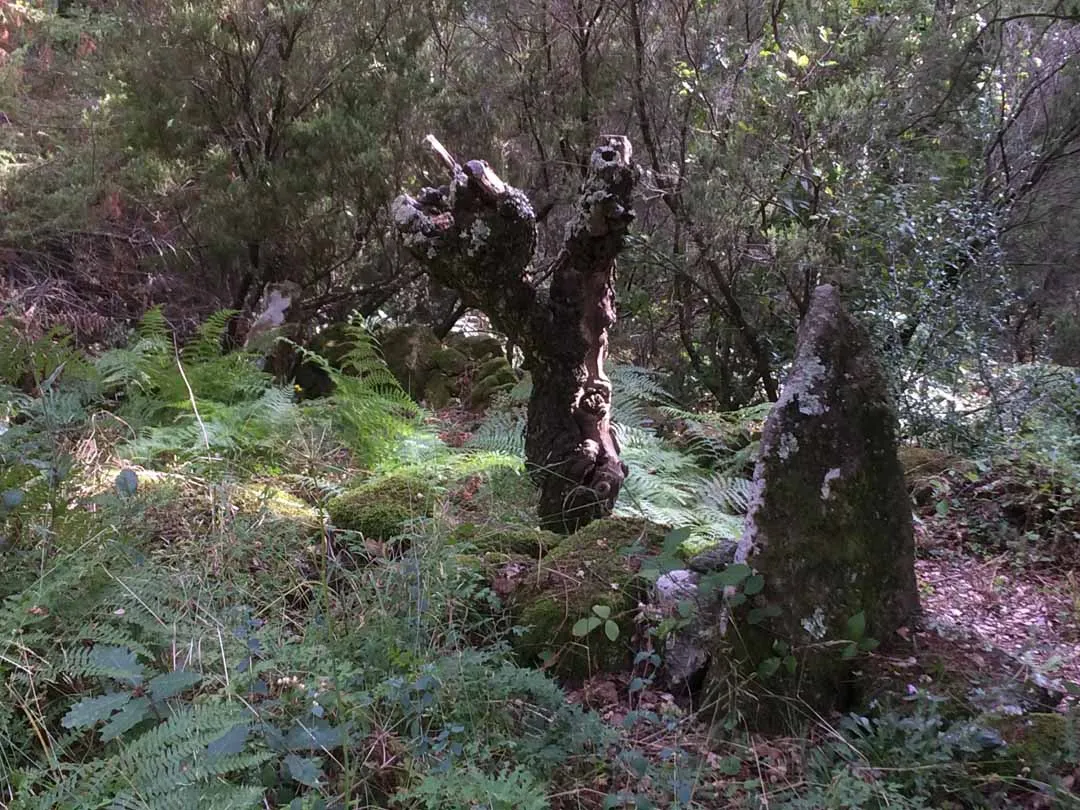
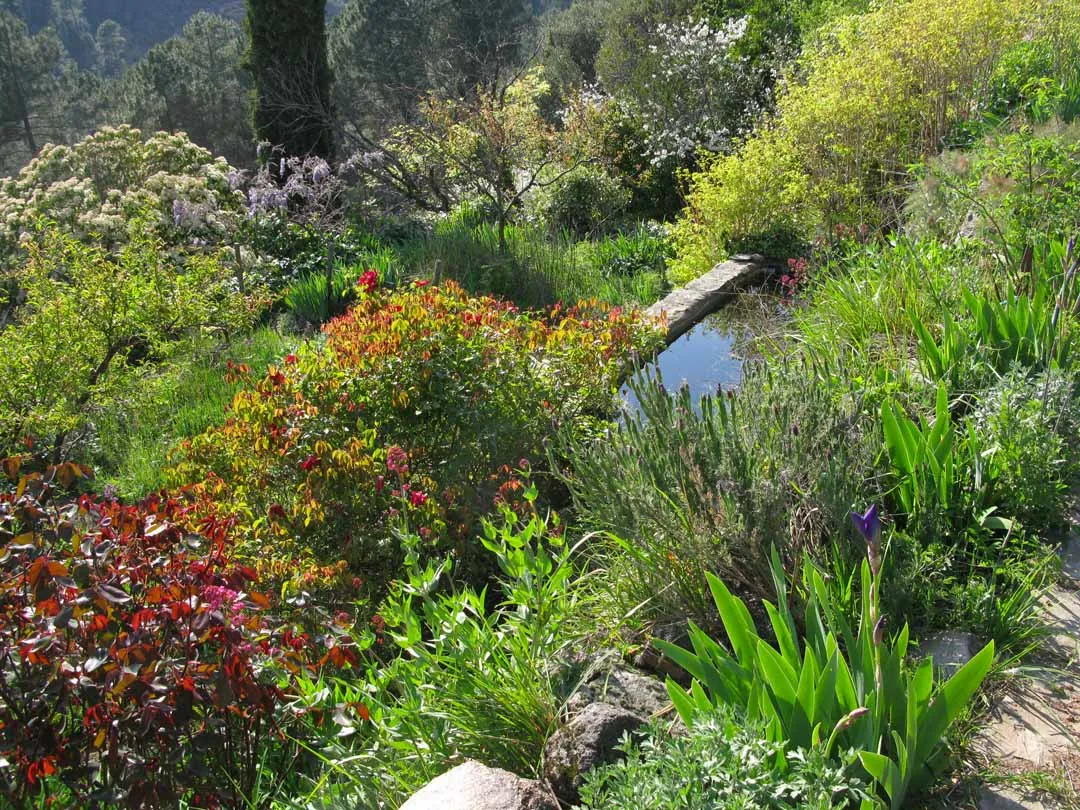
Our steeply terraced slope covers a bit more than seven hectares, formerly vineyards and orchards. A mid-mountain Mediterranean climate (average altitude of 380 m) meets the forests of the Cévennes, so that heather and wild thyme may be found together. The dry stone terraces go all the way down to the woods and then to a stream. The heather is however gaining territory. The highest part is home to a remnant of pine forest with heather and ferns, gradually replaced by wild cherry trees, maples, birches, locust trees, strawberry trees... The central part combines meadows of wild flowers (mowed twice a year), brambles, white and green oaks, hackberry, hazelnut, rosemary and laurel trees. A flowery vegetable garden extends in the heart of the hill. The lower part has remained oak and pine forest with holly and alders by the stream.
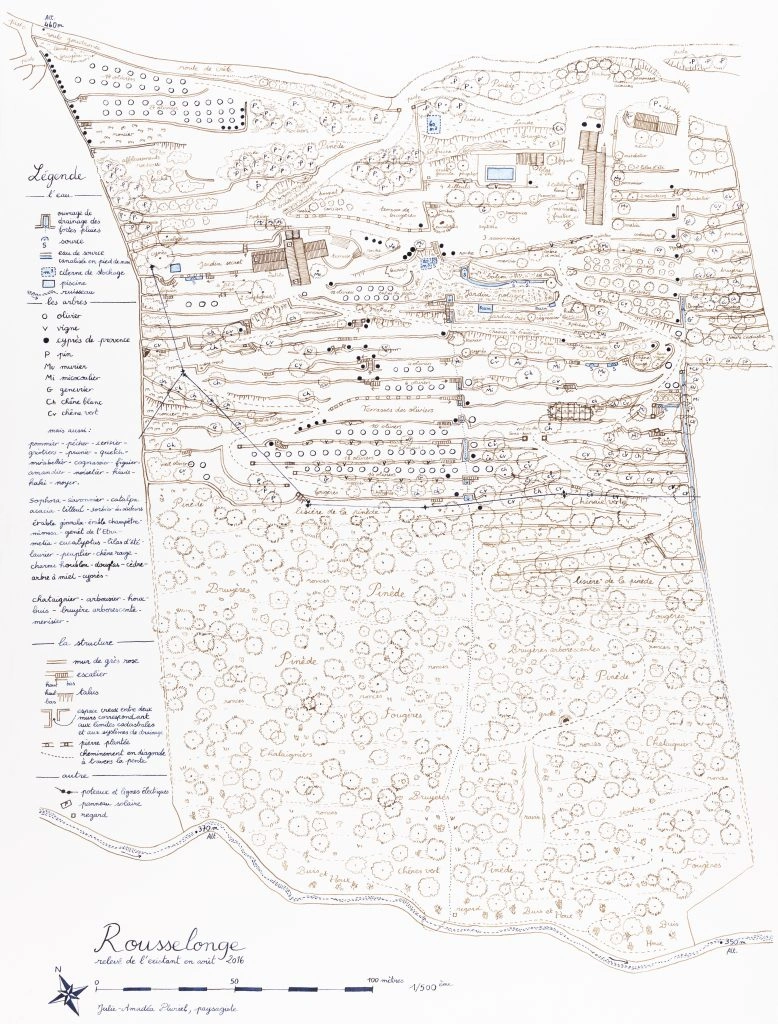
Julie Amadéa Pluriel
For over forty years, we have been enriching the vegetation around the houses with suitable trees and shrubs, now of large size: sophoras, roses, lime trees, catalpas, koelreuterias, ornamental plum trees, fruit trees and many more. Only the vegetable garden and the new plantings are watered.
My husband Bernard Dupont maintained and reworked the dry stone terraces (pink sandstone). He also installed a complex hydraulic system connecting our five vaulted springs to reservoirs, creating beautiful stone structures. In his landscaping, he favored the "planted stones" used in the past as supports for rows of vines.
For a historical and scientific version made by specialists, see under CENRA the strategy management diagnostics and the Basin Plan diagnosis. Mapping projects are being considered and will be posted on this page in the future.
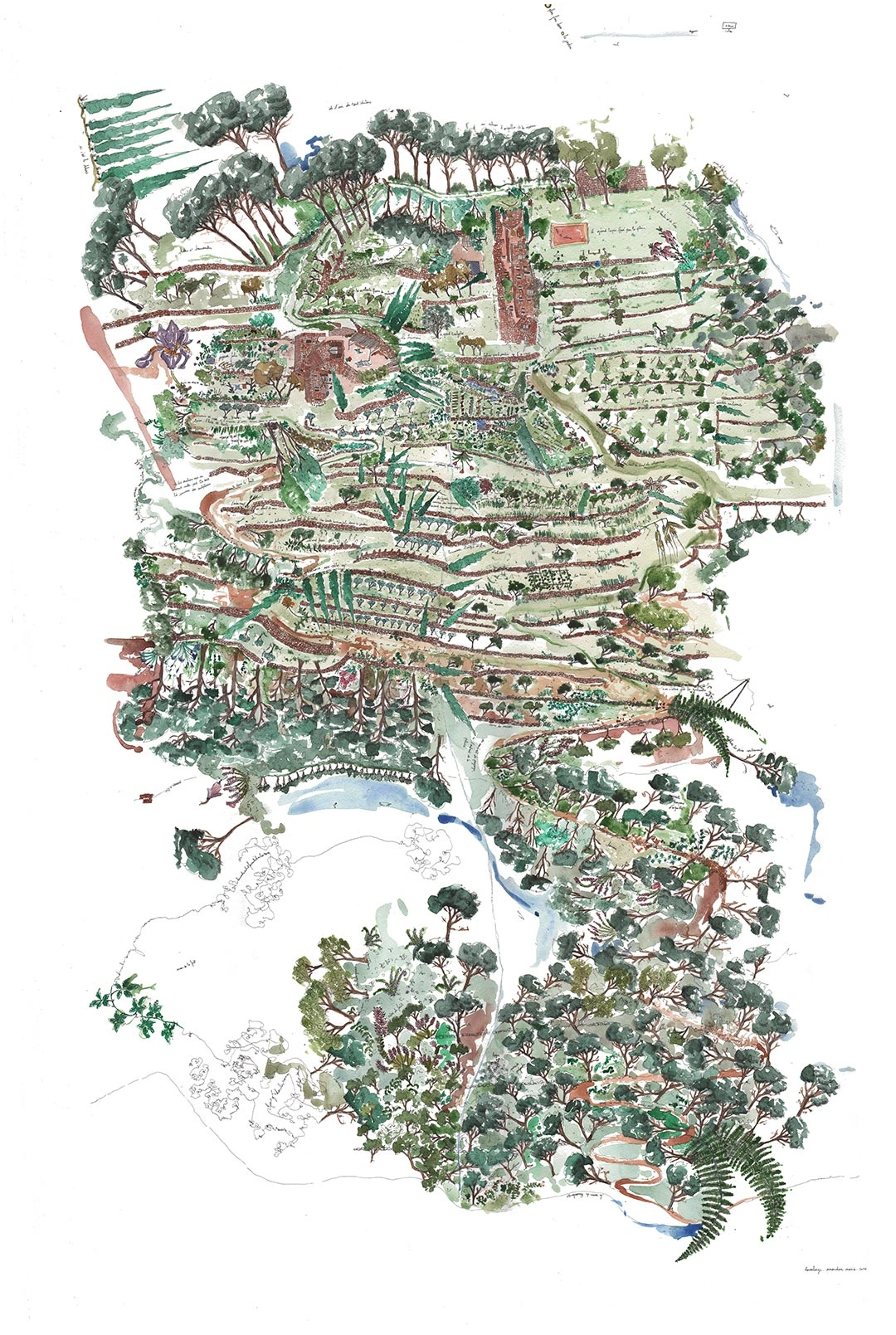
Amandine Marie, 2017
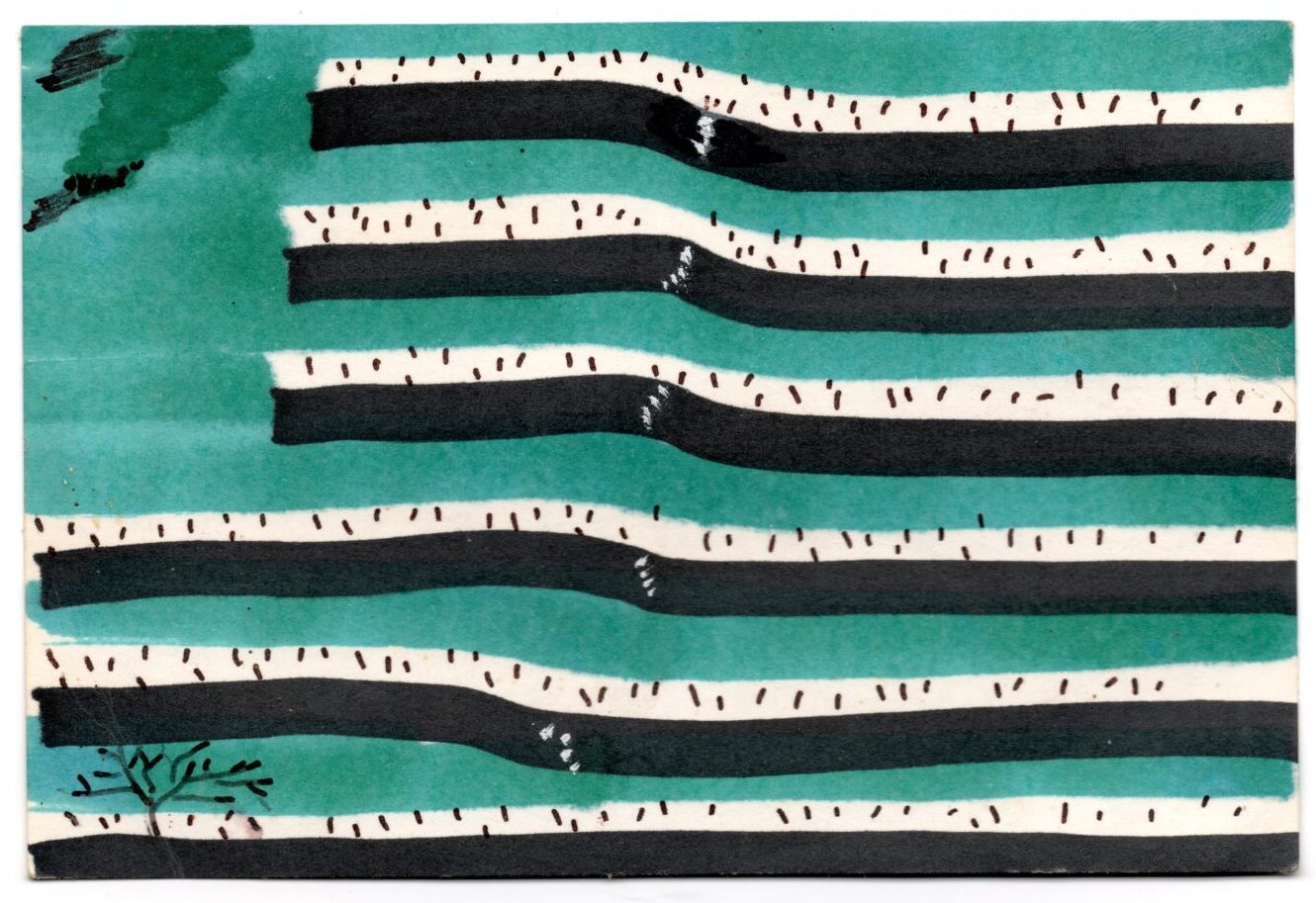
Annie François
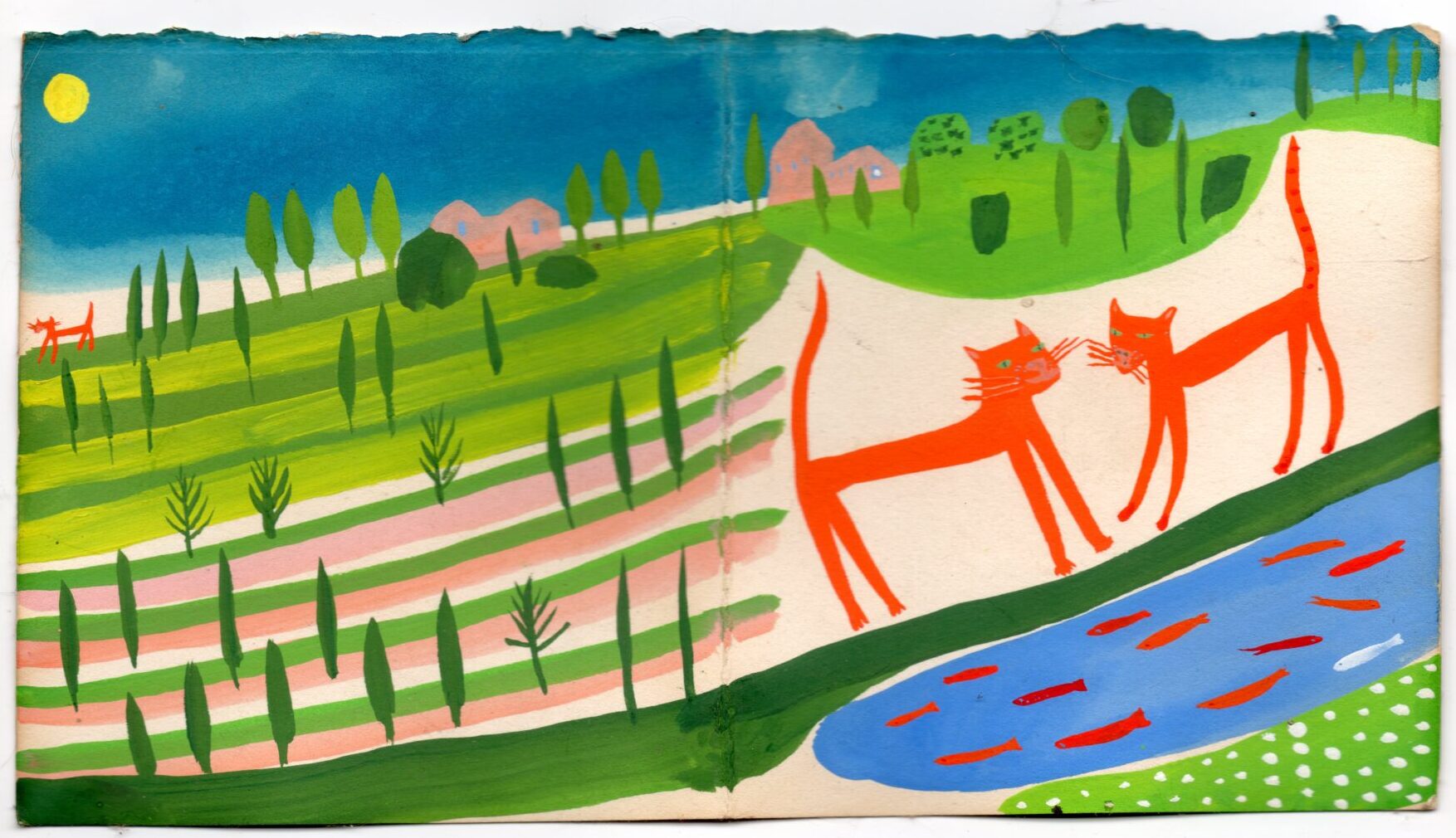
Christopher Corr
Photos of the hillside